


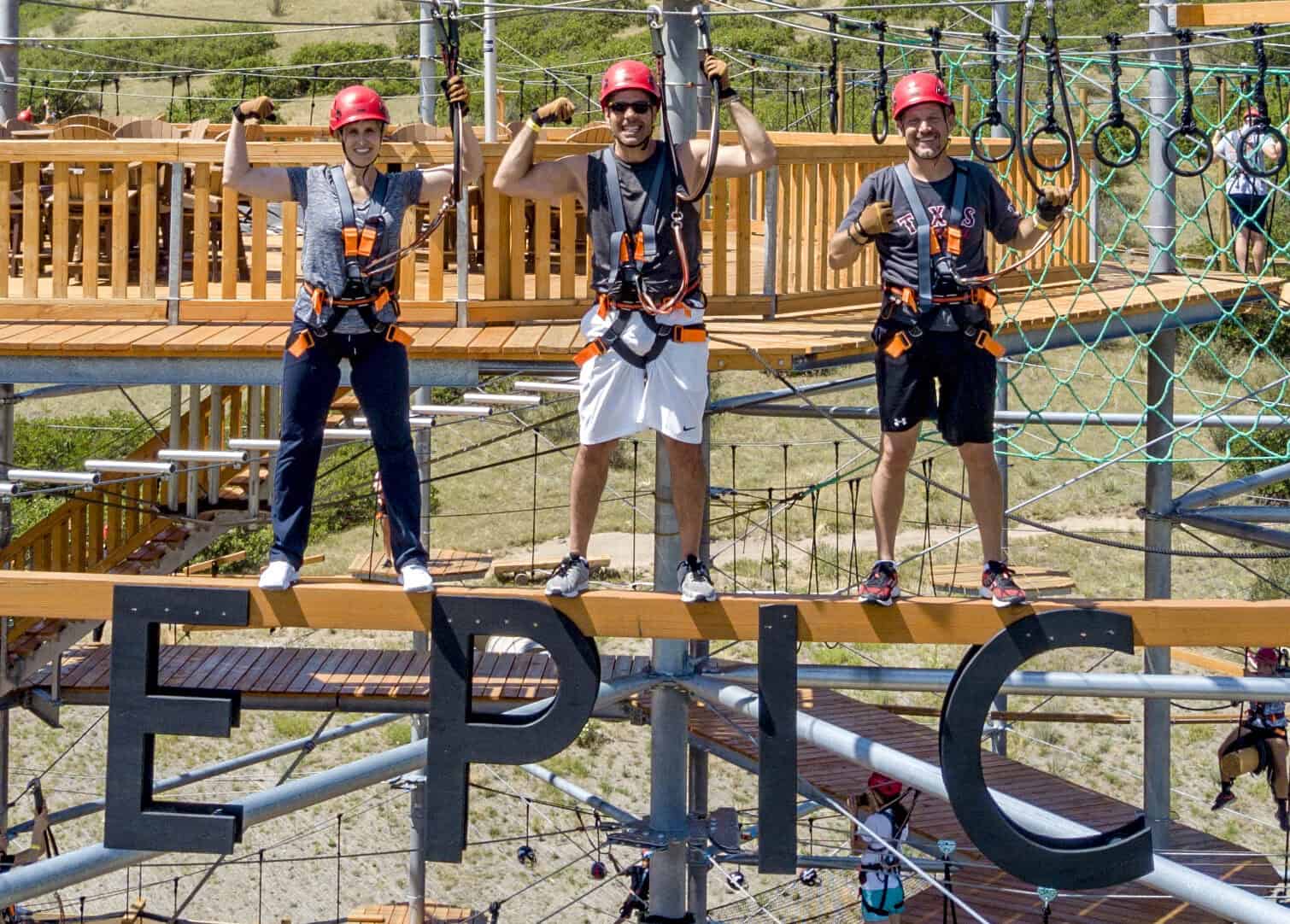
Every HR manager and team leader faces the same challenge: how do you build genuine connection among people who spend eight hours a day staring at separate screens?
The traditional answers—escape rooms, cooking classes, trivia nights—can be fun, but they often fail to create lasting change. People enjoy the afternoon, then return to their silos the next morning. The bonds don’t stick.
Adventure-based team building takes a different approach, and the research suggests there’s real science behind why it works better. As operators of one of Colorado’s largest aerial adventure parks, we’ve seen thousands of corporate groups go through this transformation. Here’s what the research tells us about why.
The Psychology of Shared Challenge
When researchers study what creates lasting bonds between people, one factor consistently emerges: shared adversity. Whether studying military units, sports teams, or emergency response crews, the pattern is the same—groups that face challenges together develop stronger cohesion than groups that merely spend time together.
This isn’t just correlation. Neurological research shows that when humans face moderate stress together, our brains release oxytocin, sometimes called the “bonding hormone.” This chemical response literally creates feelings of trust and connection.
The key word is “moderate.” Too little challenge, and there’s nothing to bond over. Too much, and stress overwhelms connection. Adventure activities like ziplines and aerial courses hit the sweet spot—challenging enough to trigger the response, but safe enough that the experience remains positive.
Why Physical Challenge Beats Mental Puzzles
Escape rooms and strategy games challenge the mind, but adventure activities add a physical dimension that engages different psychological systems:
Vulnerability creates connection. When someone admits they’re nervous about heights, or needs help on an obstacle, they’re showing vulnerability to colleagues. Research by organizational psychologist Amy Edmondson shows that psychological safety—the ability to be vulnerable without fear of judgment—is one of the strongest predictors of team performance.
Nonverbal communication matters. On a ropes course, teams communicate through body language, encouragement, and physical assistance. This builds communication patterns that don’t exist in verbal-only settings.
Embodied accomplishment sticks. Completing a physical challenge creates what psychologists call “embodied cognition”—the knowledge lives in your body, not just your mind. When you remember conquering your fear on a zipline, you feel it physically.